KLM Climate action plan
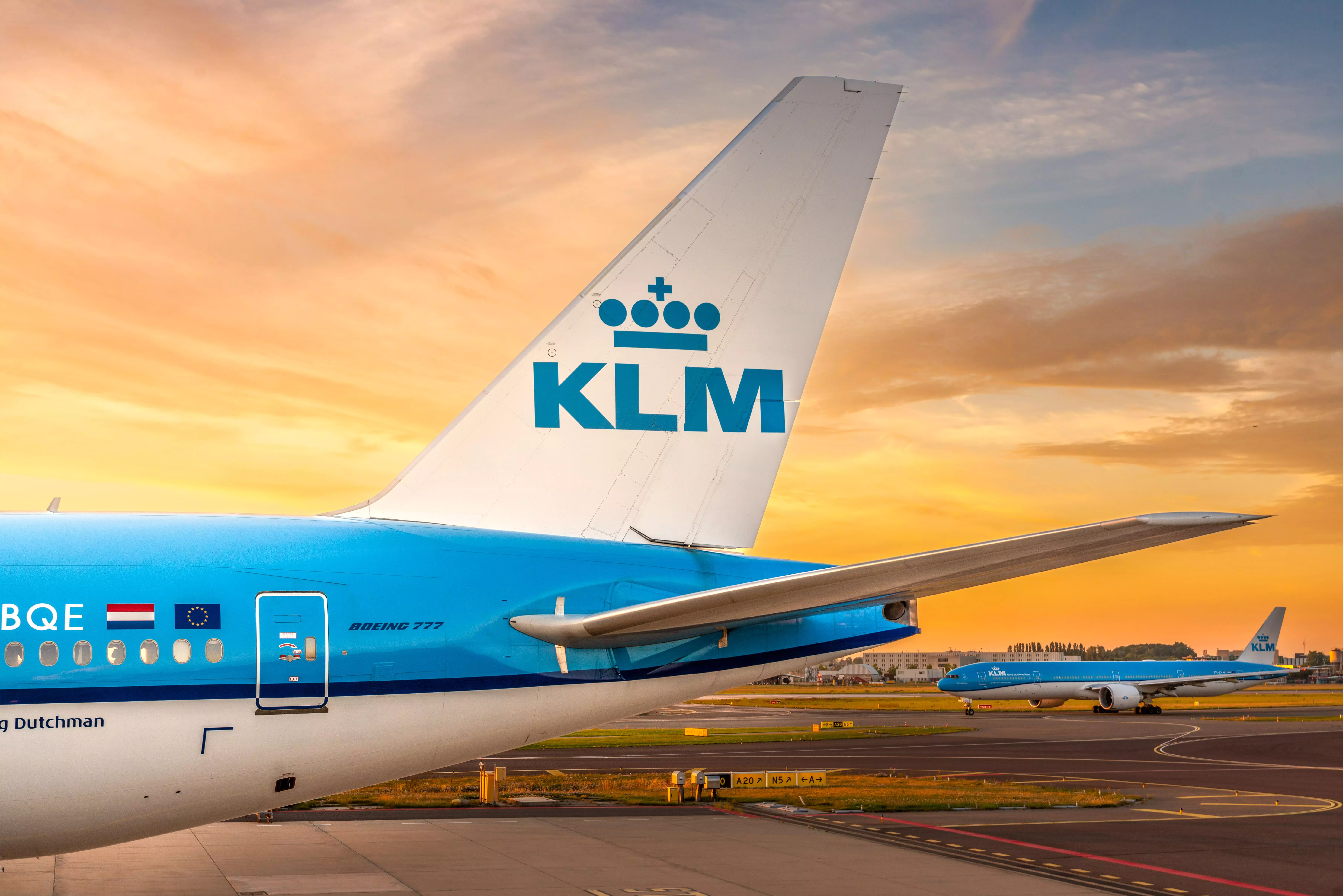
KLM is the national airline of the Netherlands and one of the world’s oldest carriers
Through its Climate Action Plan, KLM aims to significantly reduce its environmental impact by lowering CO₂ emissions, improving operational efficiency, and transitioning toward cleaner aviation technologies. The goal is to ensure long-term sustainability and align with global climate targets
ESG
Strengthening KLM’s Image Among Climate-Conscious Youth
The problem / challenges: What do you think KLM should focus on to improve its image and regain trust among young, climate-conscious travellers like you?
KLM has set ambitious sustainability goals for 2030 and 2050, focusing on increasing Sustainable Aviation Fuel (SAF), renewing its fleet with more efficient aircraft, and improving overall operational efficiency. However, recent court rulings and international media coverage have challenged KLM’s environmental credibility.
In 2024, a Dutch court ruled that several of KLM’s sustainability claims—such as promoting “CO₂-neutral flying,” “sustainable travel,” and marketing the idea that SAF or carbon offsets make flying environmentally friendly—were misleading. These statements were judged as overly optimistic, vague, or unrealistic given aviation’s current technological limitations. As a result, many young travellers, especially Gen Z, now view KLM with increased scepticism. Since Gen Z is one of the most climate-aware generations, valuing transparency, real impact, and accountability, understanding their expectations is crucial for KLM to rebuild trust and improve its public image.
ESG
KLM's Climate Strategy 2030
The problem / challenges: Which of the sustainability actions/Climate strategies should KLM focus on more to make you feel confident and climate-safe when choosing to fly with them?
KLM aims to cut its CO₂ emissions intensity by 30% by 2030 through fleet renewal, operational efficiency, scaling Sustainable Aviation Fuel (SAF) and other measures. As of 2023, KLM has already switched to 100% green electricity for ground operations and achieved a 1.5% SAF blend with major long-term SAF supply agreements.
1. Fleet Renewal & Radical Innovation
Current Activities: KLM is replacing older aircraft with more efficient models
like the Embraer E2, A321neo, and the future A350F freighters, which reduce
emissions by 20–40%. They are also studying future zero-CO₂ aircraft and
planning how to integrate them into operations.
Potential Activities by 2030: KLM aims to complete major fleet upgrades, retire remaining
high-emission aircraft, and operate its first zero-CO₂ emission demonstration
flight this decade. They will also prepare for hydrogen- or electric-powered
regional aircraft expected to enter the market around 2035.
2. Flight Operational Efficiency
Current Activities: KLM is using advanced flight-planning tools,
weight-reduction measures, single-engine taxiing, improved climb procedures,
and AI-based route optimisation. These measures collectively save significant
fuel each year.
Potential Activities by 2030: They plan to introduce next-generation AI optimizers during
flights, expand electric taxiing, continue reducing onboard weight, and benefit
from European airspace redesign (e.g., Single European Sky) to gain an
additional 1–3% fuel efficiency.
3. Sustainable Aviation Fuel (SAF)
Current Activities: KLM currently uses 1.5% SAF, has secured long-term contracts
with Neste and DG Fuels, and is the launch customer for the SkyNRG Delfzijl SAF
plant. They also run strong SAF programs for corporate, cargo, and passenger
customers.
Potential Activities by 2030: To meet climate targets, KLM will need 15–18% SAF, beyond
the EU’s 10% mandate. They plan to secure additional SAF contracts, invest in
new SAF technologies (such as Power-to-Liquid), and expand global partnerships
to ensure large-scale production and affordability.
4. Other Emission-Reduction Measures
Current Activities: KLM is piloting contrail-avoidance software (SATAVIA),
reducing non-CO₂ effects, and electrifying 63% of its ground support equipment
using green electricity. They also apply internal carbon pricing to support
greener investment decisions.
Potential Activities by 2030: They intend to reach fully net-zero ground operations,
finalise additional operational measures, strengthen supplier sustainability
programs, and adopt more non-CO₂ mitigation technologies as scientific guidance
improves.

ESG
Scaling Sustainable Aviation Fuel (SAF) usage toward the 10%
The problem / challenges: What are some of the new-age, alternative, or sustainable fuel jets you would suggest ?
A key pillar of this plan is the expansion of Sustainable Aviation Fuel (SAF), with KLM already using 1.5% SAF and targeting up to 15–18% by 2030.
SAF is a low-carbon alternative to fossil jet fuel that can reduce lifecycle emissions by at least 65%, offering a direct way to decarbonise flying. Previously, KLM relied almost entirely on conventional kerosene, which produced high CO₂ emissions; shifting to SAF helps cut emissions, future-proof operations, and meet increasingly strict climate regulations.
ESG
KLM's sustainable goals for 2050
1. Net-Zero CO₂ Emissions by 2050: KLM aims to align with the aviation sector’s global commitment fully (IATA & ICAO) to reach net-zero emissions by 2050,
meaning all remaining CO₂ will be eliminated or compensated through validated
climate solutions.
2. Transition to Zero-Emission Aircraft
(Hydrogen/Electric): KLM expects the first zero-CO₂ emission regional aircraft (battery-electric or hydrogen) to be commercially available around 2035, with wider adoption in the 2040s. The goal is to operate part of its fleet using hydrogen or electric propulsion by 2050.
3. Heavy Reliance on Synthetic SAF (e-SAF /Power-to-Liquid): long-haul flights produce 52% of total aviation
emissions and won’t have hydrogen alternatives until much later. KLM plans to
scale synthetic SAF significantly by 2050. This fuel can be produced
using captured CO₂ and green hydrogen, making it crucial for decarbonising
intercontinental flights.
Join KLM's ESG Subnetwork
Roadmap discussion
Comment:
4000 characters remaining.
Owner:
Engage groups of people to progress creative solutions through community
Show what you’ve done and where you are going- interactively with your stakeholders or the public
PIERS- Public Interactive ESG Roadmaps
Collaborate with the pubic to make better decisions on social, environmental and governance
Solutions
Qualified participants can submit solutions to collaborations for vote by communities. Earn Hero Points or money sponsorship rewards where applicable if your solution receives the most verified, qualifying votes
Roadmaps are a new way to solve challenges with community networks. You can host a collaboration to solve an issue and invite members of other WEN subnetworks or create your own. You can also join collaborations and earn hero points, rewards or in some cases sponsorship.
Participation rules
We’re committed to free and open engagement with the focus on solving a challenge or improving our world through community collaboration and consensus.
So obviously, please keep it civil, but above and beyond that—hosts and/or WeNetwork also reserve the right to remove any posts (and in extreme cases, WeNetwork members) that violate the following basic rules:
- No marketing or spam. Come on, you know this!
-
No masquerading, by either subjects or participants
Roadmaps and collaboration can be hosted by third parties, just as long as long as ownership is accurately identified.So, for instance, anyone can create a roadmap for JPMorgan as long as they are clear that they are not affiliated with JPMorgan, if that is the case. And no participant may falsely represent themselves as an affiliate, either.Users are required to disclose any material conflicts of interest in posts of any type.
-
Relevance to solution
No “look there’s a squirrel” stuff—stay on topic, relevant, and constructive.
-
Age limit
You must be 18 to use this site. If you are young, smart and engaged and really want to participate, please contact us for information about obtaining parental permission.
-
Not a complaint site
Our platform is intended for crowdsourcing solutions. Any post attempting to disparage, defame or otherwise attack any business or individual is subject to removal.If you have a specific problem with any organization, including WeNetwork or any of its members, please email [email protected].
-
Qualifications to post a solution
Anyone is welcome to post a civil, relevant and constructive comment. In most cases, though, posting a formal solution requires a minimum level of hero points. Solutions posted by anyone who doesn’t have enough hero points will be forwarded to the host for consideration.
By using this site you agree to abide by the rules set out by WeNetwork and any collaboration
host.
 47Pitches